Have you noticed a bony protrusion on the side of your big toe? If so, you may have developed the foot condition known as a bunion. Don't let bunions interfere with your daily activities.

Have you noticed a bony protrusion on the side of your big toe? If so, you may have developed the foot condition known as a bunion. Don't let bunions interfere with your daily activities.

A bunion is a common foot deformity that develops when the big toe shifts toward the smaller toes. This creates a noticeable bump along the inside of the foot near the big toe joint. Symptoms may include pain, swelling, and difficulty wearing shoes. Some people also develop corns or calluses from pressure. Risk factors include family history, inherited foot structure, and wearing tight footwear. Bunions can progress slowly, making early attention helpful for comfort.
A podiatrist will examine your foot and ask about symptoms, activity, and medical history. X-rays may help evaluate bone alignment and joint changes. Treatment often begins with conservative care. Wearing wider shoes or orthotics may reduce irritation, and stretching may improve flexibility. Bunion surgery may be considered when pain continues despite treatment, walking becomes difficult, or the deformity interferes with daily activities. The decision is largely based on symptoms and function rather than appearance alone.
Bunion surgery aims to improve alignment and relieve pressure surrounding the affected joint. The procedure depends on the bunion’s severity and foot structure. A podiatrist may realign the bone, correct joint positioning, or adjust surrounding tissues. After surgery, you may need a protective shoe, elevation, and medication. Follow-up visits help the podiatrist monitor healing and increase activity. Following post-operative instructions carefully can help promote smoother healing.
Consistent bunion pain can affect walking, work, and comfort. Surgery is not necessary for every bunion, but it can provide relief when symptoms persist and conservative care has not worked. An evaluation can clarify whether surgery is appropriate and which procedure may fit your needs. If you have a bunion and are considering foot surgery for relief, it is suggested that you consult a podiatrist who can discuss the benefits of this procedure with you.
Foot surgery is sometimes necessary to treat a foot ailment. To learn more, contact Howard Waxman, DPM of Pleasant Valley Podiatry. Our doctor will assist you with all of your foot and ankle needs.
When Is Surgery Necessary?
Foot and ankle surgery is generally reserved for cases in which less invasive, conservative procedures have failed to alleviate the problem. Some of the cases in which surgery may be necessary include:
What Types of Surgery Are There?
The type of surgery you receive will depend on the nature of the problem you have. Some of the possible surgeries include:
Benefits of Surgery
Although surgery is usually a last resort, it can provide more complete pain relief compared to non-surgical methods and may allow you to finally resume full activity.
Surgical techniques have also become increasingly sophisticated. Techniques like endoscopic surgery allow for smaller incisions and faster recovery times.
If you have any questions, please feel free to contact one of our offices located in Willoughby Hills and Broadview Heights, OH . We offer the newest diagnostic and treatment technologies for all your foot care needs.

Achilles tendon pain can range from soreness and tenderness to a sudden, serious rupture. The Achilles tendon is a strong band of tissue that connects the calf muscles to the heel. It helps the foot push off the ground while walking, running, and jumping. A rupture happens when the tendon tears after a forceful movement. A sudden snap or popping feeling in the back of the leg can be a warning sign. Some people describe it as feeling like they were struck in the calf. Pain, swelling, and difficulty pushing off the foot can occur. Importantly, a person with a ruptured Achilles tendon can sometimes still walk or move the ankle, so these abilities do not rule out a rupture.
A podiatrist can evaluate Achilles tendon pain or a suspected rupture by reviewing the injury and examining the foot, ankle, and lower leg. The examination can include the calf squeeze test, which checks foot movement when the calf is gently squeezed. A ruptured tendon can cause little or no normal foot movement with this test. A gap in the tendon is not always easy to feel because swelling can hide it. In some cases, imaging can provide more information, but a clinical examination can identify an acute rupture. Prompt recognition is important because a missed rupture can heal in a lengthened position and lead to lasting weakness.
Treatment for an Achilles rupture depends on the injury and the patient's needs. A podiatrist can help determine an appropriate treatment plan, which can include immobilization, structured rehabilitation, or surgery. Follow-up visits can allow the podiatrist to monitor healing, strength, and function and adjust treatment as recovery progresses. Achilles tendon pain without a rupture also deserves attention, especially when pain continues or affects normal activity. If you have Achilles tendon pain, it is suggested that you schedule an appointment with a podiatrist for a diagnosis and appropriate treatment.
Achilles tendon injuries need immediate attention to avoid future complications. If you have any concerns, contact Howard Waxman, DPM of Pleasant Valley Podiatry. Our doctor can provide the care you need to keep you pain-free and on your feet.
What Is the Achilles Tendon?
The Achilles tendon is a tendon that connects the lower leg muscles and calf to the heel of the foot. It is the strongest tendon in the human body and is essential for making movement possible. Because this tendon is such an integral part of the body, any injuries to it can create immense difficulties and should immediately be presented to a doctor.
What Are the Symptoms of an Achilles Tendon Injury?
There are various types of injuries that can affect the Achilles tendon. The two most common injuries are Achilles tendinitis and ruptures of the tendon.
Achilles Tendinitis Symptoms
Rupture Symptoms
Treatment and Prevention
Achilles tendon injuries are diagnosed by a thorough physical evaluation, which can include an MRI. Treatment involves rest, physical therapy, and in some cases, surgery. However, various preventative measures can be taken to avoid these injuries, such as:
If you have any questions please feel free to contact one of our offices located in Willoughby Hills and Broadview Heights, OH . We offer the newest diagnostic tools and technology to treat your foot and ankle needs.
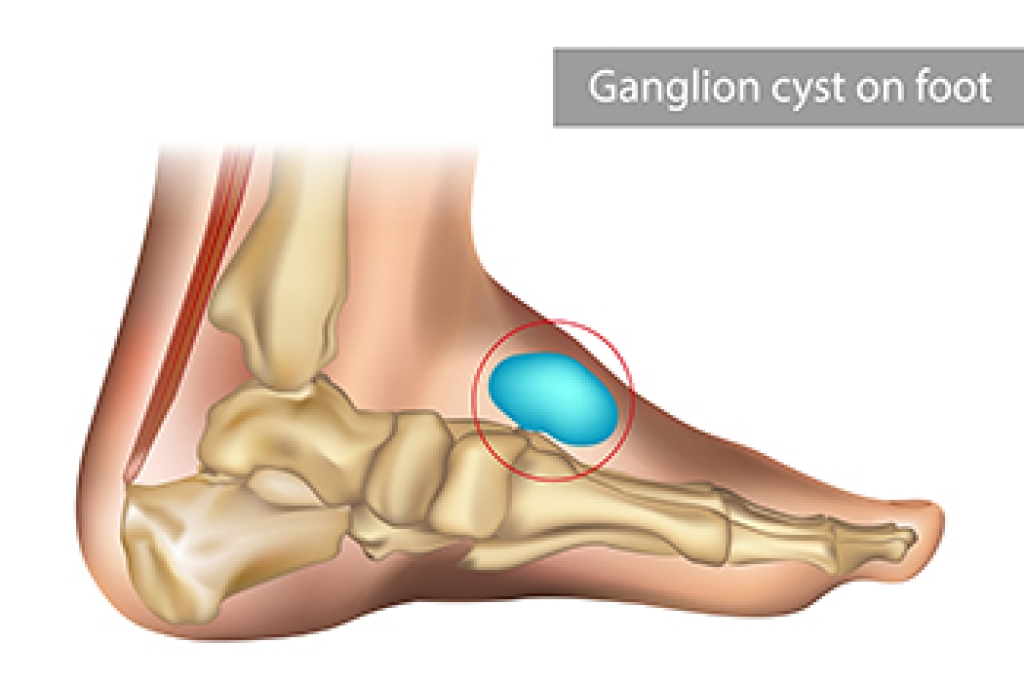
A ganglion cyst is a non-cancerous, fluid-filled lump that can develop near a joint or tendon. Ganglion cysts on the foot may form around the ankle, top of the foot, or near a joint where connective tissues are present. The cyst is usually filled with a thick, jelly-like fluid, and may feel soft or firm when touched. Symptoms may include a visible bump, tenderness, or aching. Irritation while walking may occur. The size of a cyst can change over time and may become more noticeable after activity.
The exact cause of a ganglion cyst is not always known. These cysts may develop when fluid from a joint or tendon sheath collects and forms a sac beneath the skin. Repeated stress or irritation around a joint may contribute to their development. Risk factors can include previous foot injuries, repetitive activity, and conditions that place ongoing stress on the feet. Some people develop a cyst without an obvious injury or triggering event. Because other lumps can look similar, a new growth should be evaluated rather than assumed to be a ganglion cyst.
A podiatrist can examine the foot and determine whether a ganglion cyst is responsible for the lump and symptoms. The evaluation may include reviewing medical history, examining the size and location of the cyst, and checking nearby joints and tendons. Imaging such as an ultrasound or an MRI scan may be recommended when the diagnosis is uncertain. When symptoms interfere with footwear or walking footwear changes may be suggested. Aspiration or surgical removal may be needed, depending on the cyst and the patient’s needs.
Ganglion cysts are usually benign, but persistent growth, pain, or changes in the surrounding skin deserve professional attention. A podiatrist can explain the available treatment options and help determine whether intervention is necessary. If you have a ganglion cyst on your foot, it is suggested that you consult a podiatrist for effective relief and management solutions.
Foot Pain
Foot pain can be extremely painful and debilitating. If you have a foot pain, consult with Howard Waxman, DPM from Pleasant Valley Podiatry. Our doctor will assess your condition and provide you with quality foot and ankle treatment.
Causes
Foot pain is a very broad condition that could be caused by one or more ailments. The most common include:
Diagnosis
To figure out the cause of foot pain, podiatrists utilize several different methods. This can range from simple visual inspections and sensation tests to X-rays and MRI scans. Prior medical history, family medical history, and any recent physical traumatic events will all be taken into consideration for a proper diagnosis.
Treatment
Treatment depends upon the cause of the foot pain. Whether it is resting, staying off the foot, or having surgery; podiatrists have a number of treatment options available for foot pain.
If you have any questions, please feel free to contact one of our offices located in Willoughby Hills and Broadview Heights, OH . We offer the newest diagnostic and treatment technologies for all your foot care needs.

Congenital foot problems are conditions that are present at birth. Some are easy to notice right away, while others become more obvious as a child begins standing and walking. These conditions can affect the shape, position, or movement of the feet. Some are mild and improve as a child grows. Others require prompt care to help the feet develop correctly. Examples include clubfoot, flat feet, and high-arched feet. Clubfoot causes the foot to turn inward and downward. Another condition, called metatarsus adductus, causes the front of the foot to curve inward. A podiatrist examines the feet, checks how they move, and looks for signs that the condition could affect healthy growth or normal movement.
Some congenital foot problems become more noticeable when a child starts walking. Parents might see uneven shoe wear, frequent tripping, or a foot that points in an unusual direction. Certain conditions also affect balance and standing. A podiatrist performs a detailed examination and determines whether the problem is flexible or more rigid. Imaging tests are sometimes used to better understand the bones and joints. Care depends on the child's age, the type of condition, and how much it affects daily activities. Treatment includes custom orthotics, special casts, or braces designed to improve foot position. Some children benefit from surgery when the deformity is severe or limits normal foot function.
Regular follow-up visits allow a podiatrist to monitor foot growth and make changes to treatment as a child develops. Early care can improve walking, reduce discomfort, and support healthy foot function for many years. Parents should not ignore changes in foot shape, balance, or the way a child walks. Prompt evaluation provides valuable information and helps guide the best treatment plan. If your child is born with a foot disorder, it is suggested that you schedule an appointment with a podiatrist for effective treatment and management solutions.
Congenital foot problems require immediate attention to avoid future complications. If you have any concerns, contact Howard Waxman, DPM of Pleasant Valley Podiatry. Our doctor can provide the care you need to keep you pain-free and on your feet.
Congenital foot problems are deformities affecting the feet, toes, and/or ankles that children are born with. Some of these conditions have a genetic cause while others just happen. Some specific foot ailments that children may be born with include clubfeet, polydactyly/macrodactyly, and cleft foot. There are several other foot anomalies that can occur congenitally. What all of these conditions have in common is that a child may experience difficulty walking or performing everyday activities, as well as trouble finding footwear that fits their foot deformity. Some of these conditions are more serious than others. Consulting with a podiatrist as early as possible will help in properly diagnosing a child’s foot condition while getting the necessary treatment underway.
What are Causes of Congenital Foot Problem?
A congenital foot problem is one that happens to a child at birth. These conditions can be caused by a genetic predisposition, developmental or positional abnormalities during gestation, or with no known cause.
What are Symptoms of Congenital Foot Problems?
Symptoms vary by the congenital condition. Symptoms may consist of the following:
Treatment and Prevention
While there is nothing one can do to prevent congenital foot problems, raising awareness and receiving neonatal screenings are important. Early detection by taking your child to a podiatrist leads to the best outcome possible.
If you have any questions, please feel free to contact one of our offices located in Willoughby Hills and Broadview Heights, OH . We offer the newest diagnostic and treatment technologies for all your foot care needs.